
Restoring Landscapes. Strengthening Livelihoods.
Launched in 2021 and expanded in 2025, the JLH Agroforestry Project supports rural households to grow trees alongside crops, restoring land while improving food security, income, and climate resilience.
Agroforestry for climate resilience and household transformation
Communities across the Acholi sub-region, including Agago, Pader, Kitgum, Amuru, and Gulu, continue to face deforestation, land degradation, reduced soil fertility, household energy pressure, and food insecurity.
- Restores degraded landscapes and increases tree cover
- Improves soil fertility, moisture retention, and farm productivity
- Supports household food security and income generation
- Reduces pressure on natural forests through sustainable fuelwood
- Builds household and community resilience to climate change
Trees integrated into farming systems
AFP supports farmers with a practical mix of tree species that provide short-term household benefits and long-term environmental restoration.
Fruit Trees
Improve family nutrition and create additional household income through fruit production.
Fast-Growing Species
Species such as Calliandra provide sustainable firewood near homes and reduce pressure on natural forests.
Long-Term Trees
Support carbon capture, future timber income, and long-term restoration of degraded ecosystems.
Community-led learning and practical action
The project works through church-led farmer groups, strengthening local ownership, shared responsibility, and environmental stewardship.
Household Selection
100 households are selected based on poverty status, land availability, and willingness to participate.
Training Sites
Each of the 5 farmer groups develops one learning site for agroforestry and sustainable ecosystem management.
Seedling Support
Households receive mixed tree seedlings to plant alongside crops and around their homesteads.
Energy Saving
Families are trained in Lorena energy-saving stoves and sustainable tree management for household fuel needs.
Growing impact across communities
AFP is designed to strengthen household resilience while restoring the natural environment for future generations.
A balanced mix for food, fuel, timber, and restoration
Participating households receive a mix of tree seedlings designed to deliver both immediate and long-term benefits. Fruit trees support food and income. Quick-maturing species such as Calliandra provide household firewood. Long-term species support carbon capture, timber, and ecosystem restoration.
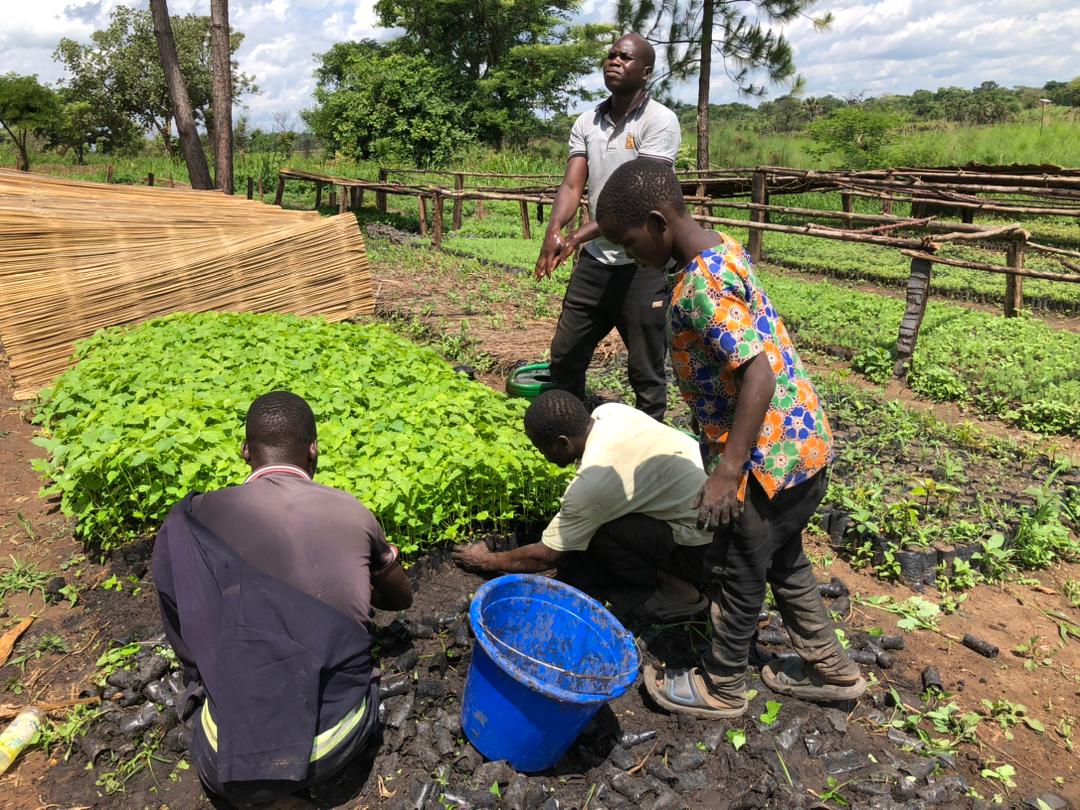
Agroforestry in action
Training, seedling preparation, nursery management, field planting, and community-led restoration.



Long-term environmental and livelihood impact
Through sustained implementation, the Agroforestry Project contributes to greener, more productive, and more climate-resilient communities.
Restored Landscapes
Increased tree cover and improved ecosystem health in participating communities.
Improved Productivity
Better soil fertility, moisture retention, and crop performance through agroforestry systems.
Climate Resilience
Households are better equipped to adapt to changing environmental conditions.
Household Income
Fruit and timber species create diversified income opportunities over time.
Sustainable Energy
Fast-growing fuelwood trees and Lorena stoves reduce pressure on natural forests.
Community Stewardship
Church-led groups strengthen shared responsibility for environmental care.
“By planting trees alongside crops, families are restoring their land today while creating food, income, and environmental benefits for future generations.”
Partner with JLH in growing a greener future
JLH welcomes partnerships with communities, churches, development organizations, and supporters who share our commitment to environmental restoration and sustainable livelihoods.